
Essential Pet Travel Checklist Key Takeaways
- Organize your pet’s health records and IDs for stress-free trips.
- Ensure your pet has a collar with your phone number and/or microchip.
- Acclimate pets to their carriers before travel by letting them play, sleep, and explore it to reduce travel anxiety.
- Bring collapsible water bowls, your pet’s usual food, and comfort items, like their favorite blanket, toy, or a T-shirt that smells like home, on any trips.
- Don’t forget hygiene items and a first aid kit for your pet on trips, containing bandages, antiseptics, tick removers, prescription medications, or even litter, litter trays, pee pads, poop bags, and other pet care products.
Pet and family travel are becoming synonymous as a growing number of people view their cats and dogs as actual family members. It’s something that makes sense when you look at what pets offer: companionship and loyalty. For many, they also help fill that innate caregiver instinct.
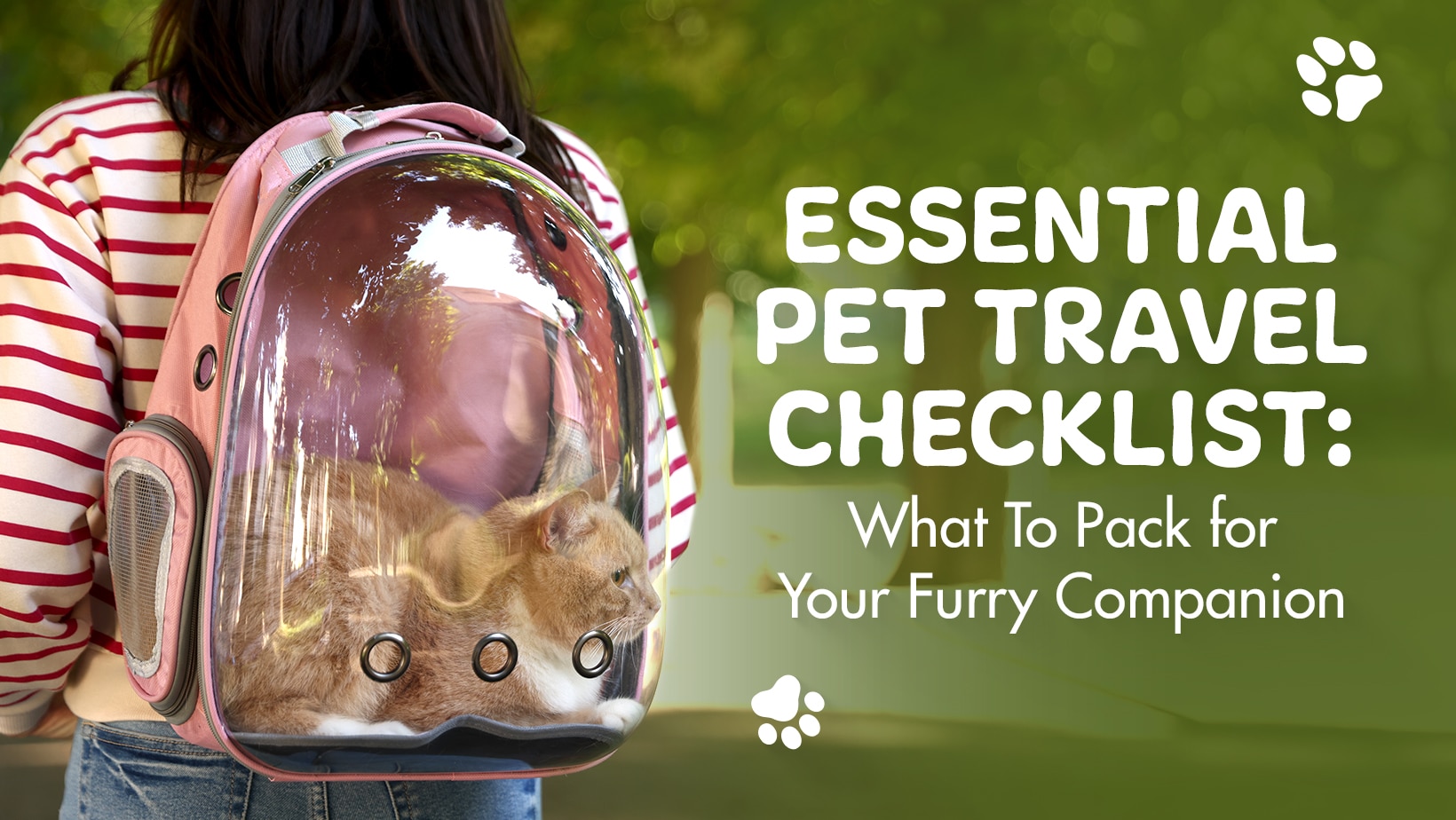
Essential Pet Travel Checklist: What To Pack for Your Furry Friend
Whatever your reason for traveling with your pet, it doesn’t eliminate the complexity of preparation. Every vacation idea seems to come with an essential checklist, and often it’s best to have a physical list, because, as sharp as we might think we are, things always slip through the cracks.
So, what exactly should you have on your comprehensive cat or dog packing list? Well, that’s precisely what we’re here to cover.
Security Essentials: Documents and ID
Top of mind should be any paperwork.
Now, this is especially important when you’re flying. International and airline travel require specific documents, including rabies and vaccination records and health certificates.
If you’re just going on a road trip, which most families choose to do when they travel with their pets, then the amount of paperwork may differ. But these documents are still a vital part of your pet travel checklist and are good to have in case of an emergency on the road.
Beyond the health records, you should always have an ID tag on your animal. The tag should be prominent and attached to a sturdy, secure collar, one unlikely to break away. At a minimum, the tag should include your phone number.
Microchipping is also important. If your pet isn’t already, consider adding it to your cat and dog packing list. Microchipped cats and dogs are returned to owners more often than those that aren’t.
Comfort on the Go: Carriers and Crates
Pets like predictability. They like routines, and they like having a comfortable environment.
When you’re taking them away from their “home base,” it’s necessary to bring something as comfortable and familiar as home. The best way to do this is with a carrier.
When used correctly, a carrier can become a sort of mobile home for your pet. Acclimate them to the bag or crate by setting it up in their sleeping area. Place a T-shirt or another piece of clothing with your scent on it inside, and let your pet explore, nap, and play in and around the carrier as they please. You want your pet to understand that the carrier is a safe place.
A carrier isn’t just a comfort for your pet. The right carrier can be a comfort for you. For smaller pups, something like a dog sling carrier can be a game-changer, because it keeps them close and secure, but it also helps you be hands-free when you need to be. There are also cat sling options available in soft pet carrier models.
These aren’t suitable for containment in cars or on planes, though. You’ll need to add an enclosure-type carrier to your cat or dog packing list, something that is still high-quality and comfortable, but that meets the guidelines of your type of travel.
Nutritional Support: Food, Water, and Treats
Just like you, your pet has to eat and stay hydrated. That’s why no pet travel checklist is complete without mentioning food, water, and treats.
As far as how much you need to pack, that depends on your pet, their weight, the recommendations of your vet, and the particular food brand that you buy. However, regardless of those specific guidelines, it’s necessary to pack two to three days more food than you think you’ll need, just in case of delays.
It’s also important that you don’t switch food brands during a trip. Many animals have sensitivities, and changes in diet can lead to upset stomachs and bathroom troubles. That’s why it’s always advisable to purchase food from your local store where you know that your pet’s brand is available, rather than waiting until you get there and hoping, crossing your fingers, that a store has your brand in stock.
Another helpful item to have on your cat or dog packing list is collapsible food and water bowls. These save space and are easy enough to put in a spare bag when you’re going out for the day.
Finally, while treats may not be essential, they help reward and instill good behavior, especially in new environments. Treats may also relieve some anxiety that your pet might be feeling. Just remember not to overdo it. Treats are for supplemental feeding. They’re not replacement meals.
Peace of Mind: Safety and Health Preparation
Any time you’re traveling with a pet, you have to prepare for the unexpected. Animals, while they may be predictable at home, can be unpredictable in situations they’re unfamiliar with. A lot of that stems from anxiety.
For safety and health preparation, the next essential item on your pet travel checklist should be a pet first aid kit. This should include:
- Bandages
- Antiseptic
- Tick removers
- Prescription medications
You’ll also want to add waste management essentials to your cat and dog packing list, including litter, litter trays, poop bags, and pee pads. These items are especially helpful for long car rides, hotel stays, and general cleanup when out and about.
Beyond first aid and waste management, remember to pack comfort items for your animal. Comfort items can be a blanket or a favorite toy. It should usually be something that has familiar smells to soothe them. Those smells should be things that remind them of home, like a T-shirt. Don’t wash it, just bring it. You just want to provide anything to help them feel like they’re in a safe space when traveling.
Lastly, wherever you’re going, whatever stops you’re making, make sure that you familiarize yourself with the hospitals and emergency vet clinics in those areas, just in case something goes wrong.
Pet Travel: The New Norm
Bringing pets with you when traveling is becoming increasingly normalized. A growing number of people feel that pets are family. Traveling with your pet and keeping them close to you strengthens the bond between you and your animal. It helps build trust and further establish that familial bond.
The above are only suggestions for a cat or dog packing list. You must remember that your cat or dog is unique. When you’re packing, think of them.
Best of luck on your journey, and safe travels.
About the Writer: Aaron Smith is an LA-based content strategist and consultant in support of STEM firms and medical practices. He covers industry developments and helps companies connect with clients. In his free time, Aaron enjoys reading and writing about adventure, fitness, and lifestyle.
About the Editor: Staci is the New Yorker who launched NovemberSunflower.com in March of 2009. In the beginning this digital publication had just one writer. Over the years, Staci opened her platform to guest writers, and she then not only wrote for NovemberSunflower.com, but also stepped into the editor role, making her the Editor-in-Chief. Learn more about Staci.

Want great content delivered right to your email inbox?
Sign up for November Sunflower’s monthly newsletter (you get some free goodies when you sign up).