
Key Takeaways
- International fashion capitals are transforming style in 2026 by blending modern silhouettes and cultural identity.
- Multiple cities around the world have something unique to offer, like urban fluidity in New York, tropical modernism in Sao Paulo, and luxe hybridism in Mumbai.
- With fashion power now being shared across cities, streetwear fashion trends are more global and collaborative than ever.
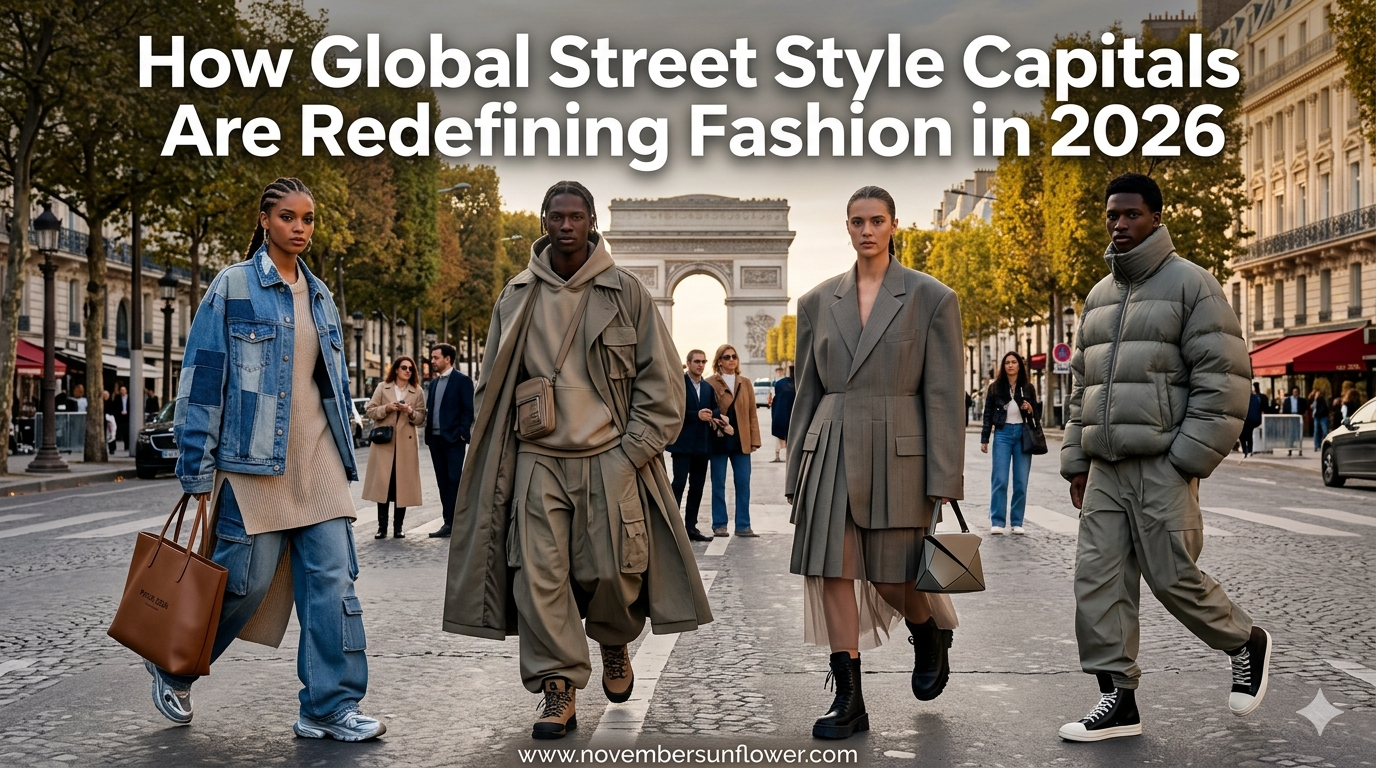
Global Street Style Fashion
If you were asked about the world’s fashion-powerhouse cities years ago, you would’ve replied with New York, London, Paris, maybe even Milan, and you would’ve been right.
Fast-forward to today, and these cities only scratch the surface of couture around the world. Fashion power isn’t concentrated in only a few cities anymore. Instead, hubs around the world are shaping silhouettes, the definition of style, and color trends thanks to cross-cultural exchanges, mobility, and digital influence. Let’s explore how today’s cities are rewriting global fashion’s rules at the street level. Global street style capitals are on the rise in 2026. This shift isn’t just geographic. It’s cultural.
Seoul: Precision Minimalism
A visit to Seoul will immerse you in precision minimalism. It is a language of style built on engineered silhouettes (e.g., structured shoulder blazers and heavyweight tees), immaculate tailoring and futuristic vibes. Today’s Korean designers have begun to merge architectural cuts with tech fabrics like moisture-wicking or waterproof materials, creating clothes that feel both avant-garde and wearable.
The influence of Seoul is spreading through social media and entertainment, so its aesthetic has instantly become global. You’ll see monochrome palettes, subtle luxury and structured outerwear dotting the streets, reshaping the way we interpret adopting a clean look around the world.
Lagos: Cultural Maximalism
This city has redefined cultural maximalism, where bold prints and sculptural shapes define the garments. Nigerian designers are combining contemporary silhouettes (e.g., fitted look) with heritage textiles (e.g., aso-oke, a woven fabric with patterns or stripes), creating clothing that feels deeply rooted and celebratory.
The 2026 Fashion Week in Lagos is now one of the major go-to places for buyers and editors looking for fresh fashion perspectives. Lagos’s influence is more apparent than ever in the world’s embrace of handcrafted detailing, saturated color, mixed patterns, and lots of accessories, including textured belts, caps, and bracelets, showing both the meaningful and the modern side of maximalism.
Copenhagen: Cool Sustainability
Copenhagen remains a leader in today’s global sustainability movement. It has adopted a functional and chic approach where clothing is eco-conscious and modular. Scandinavian fashion artists are pioneering silhouettes you can wear in several configurations (e.g., wrap dresses you can tie in multiple ways, or modular jackets whose panels are removable). They create long-lasting clothing with biodegradable, recycled or reused materials like polyester or plastic recovered from the ocean. Copenhagen’s street style combines softness and practicality, so you’ll find fashion-forward individuals wearing relaxed tailoring, oversized knits and neutral palettes. It continues to provide a compelling blueprint for getting dressed in style while not ignoring environmental responsibility.
Tokyo: Tech Art
Look no further than Tokyo if you’re searching for the global city where experimental fashion takes center stage. Designers in Japan are merging layered streetwear fashion (e.g., stacking multiple jackets), light-emitting diode fabrics, and augmented reality (AR) accessories (like rings that show glowing auras in AR or glasses frames that reveal animated wings) for the perfect tech-art aesthetic creations.
In Tokyo, fashion is all about contradiction. Clothing is intentional yet chaotic, and serious yet playful. Its influence has spread worldwide through digital fashion, anime and gaming culture, inspiring designers in several countries to embrace wearable technology, unconventional silhouettes like trapezoid tops or cube-shaped jackets, and asymmetry.
New York: Urban Fluidity
The Big Apple’s 2026 fashion identity can be summed up in two words – urban fluidity, which blends nightlife aesthetics, streetwear and business casual. Designers in New York love gender-fluid silhouettes, hybrid outfits that transition seamlessly from daytime to nightlife wear, and oversized proportions. New York’s multicultural energy contributes to its constant reinvention, so it’s no surprise that NYC has become a hub attracting emerging designers looking to challenge traditional fashion categories. New York fashion reflects the way people live daily: expressive, fast and flexible.
São Paulo: Tropical Modernism
This city is shaping fashion in 2026 with a tropical spin. Its tropical modernism approach fuses architectural tailoring with bold color and organic shapes. Think sun-themed palettes, fluid draping, and unexpected cutouts (e.g., at collarbones and on shoulders). Brazilian designers draw from the nation’s heritage of modernist art and biodiversity, creating clothes that feel optimistic, warm, and sculptural. You can see the city’s influence in the growing number of consumers seeking expressive, joyful fashion that feels refined.
Mumbai: Luxe Hybridism
Luxe hybridism is all the rage in Mumbai, blending contemporary silhouettes with traditional Indian craftsmanship. Designers in 2026 are combining draped fabrics, metallics, and embroidery with contemporary tailoring, producing pieces that are both Indian and global at first glance. The city’s global influence is particularly noticeable through Bollywood, in diaspora communities and at fashion weeks around the globe. It pushes fashionistas toward ornate detailing, richer textures (like beadwork and sequins), and jewel tones.
The Digital World
Platforms like metaverse fashion and AI-generated styling work alongside today’s global fashion cities to quickly shape trends in 2026. Designers all over the globe can gain influence overnight through the digital world, shifting power from legacy fashion houses to individuals.
Adopt Global Street Fashion With Confidence
Global style capitals in 2026 aren’t competing; they’re creating art collaboratively. Every international fashion powerhouse of a city today contributes a unique aesthetic language, ranging from minimalism in Seoul to sustainability in Copenhagen. Together, these cities have formed a fashion ecosystem known worldwide for being culture-heavy and innovative. Consider each thread of this ecosystem your own style guide as you seek to adopt a truly global look that puts you on the front lines of fashion today no matter where you live.
About the Writer: Aaron Smith is an LA-based content strategist and consultant in support of STEM firms and medical practices. He covers industry developments and helps companies connect with clients. In his free time, Aaron enjoys reading and writing about adventure, fitness, and lifestyle.








Leave A Comment